
Skincare & Supplement Ingredient Dictionary
Science-backed profiles covering chemistry, mechanisms, sourcing, regulatory status, and formulation guidance for cosmetic actives, botanical extracts, vitamins, and specialty ingredients


Popular
Try another ingredient name or check your spelling.
Most Searched Ingredients
Explore our most-referenced cosmetic actives, botanical extracts, vitamins, and specialty ingredients
Hyaluronic Acid NEW
Hyaluronic Acid 6
Hyaluronic Acid 5
Hyaluronic Acid 4
Hyaluronic Acid 3
Hyaluronic Acid 2
Ingredients Global Sourcing by Region
Ingredient availability, cost, and lead times vary significantly by manufacturing region.Understanding regional strengths and constraints helps anticipate development and supply chain challenges early.
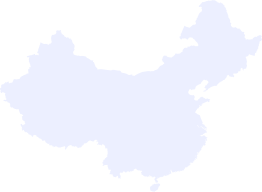

China
High-volume manufacturing, vertically integrated supply chains, cost efficiency across raw materials, components, and finished goods
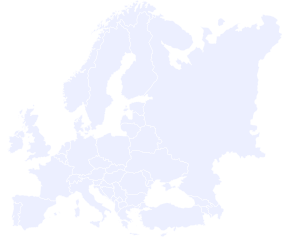

Europe
Advanced processing technologies, strong quality systems, premium and specialty ingredient manufacturing


Korea
Innovation-driven cosmetic ingredient manufacturing, advanced formulation technologies, rapid prototyping
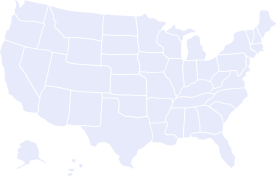

United States
Pharmaceutical-grade manufacturing standards, specialty and regulated ingredient production
Important considerations: Ingredient availability by country can influence both cost and timelines. Many specialty actives, bioactives, and regulated ingredients are sourced from Europe and the United States, even when final manufacturing occurs elsewhere.
Ready to Source Your Next Product?


Supply Chain Risk Patterns
Supply chain risk does not imply failure. It highlights areas where contingency planning iscommonly required due to variability in sourcing, manufacturing, and logistics.
Understanding these patterns supports more realistic planning and risk mitigation.
Packaging and Component Reality
Packaging selection plays a critical role in timelines, cost, and scalability. Differences between stock and custom packaging extend beyond appearance.
Packaging procurement is a frequent cause of production delays across both cosmetics and dietary supplements, as packaging timelines are often underestimated during early development stages. Custom containers may require mold creation, material production, and quality testing, while stock components can experience backorders due to demand fluctuations. Additional time is commonly required for label printing, regulatory review, and formula-packaging compatibility testing. When packaging procurement begins after formulation is finalized, it can extend the overal launch schedule by several weeks.
DIY vs. Hiring a Sourcing Team
Map likelihood vs impact, then lock one-action mitigations to keep your China supply chain bulletproof — even during CNY shutdowns or tariff spikes.
Minimum Order Quantities (MOQs) and Development Cost Structures
MOQs and development costs vary by manufacturer, ingredient availability, packaging selection,and production method. Higher customization typically increases both minimums and upfront investment.
Development costs increase with formulation complexity, testing requirements, and custom packaging components.
Minimum Order Quantities (MOQs) and Development Cost Structures


Typical Manufacturing Workflow
Understanding the main steps in the manufacturing process helps anticipate timelines and dependencies
Parallel vS Sequential Workstreams
Understanding which activities can run simultaneously versus which require sequential completion optimizes project timelines
What can happen in parallel:
- Packaging procurement
- Label review
What must be sequential:
- Final formula approval
- Compatibility testing
- Production release
Where Delays Most Commonly Occur
Delay Hotspots

Packaging Components

Formula Revisions After

Factory Line Scheduling

Freight Availability
Estimated Product Development Timelines
Product development timelines vary based on ingredient complexity, sourcing regions, packagingchoices, and regulatory review. Delays are most commonly introduced during packagingprocurement and revision cycles.
Product Creation by Kanary
Get Connected
As a loose guide, the typical “sweet spot” Kanary client who will benefit the most from our process and scaleable expertise will have annual gross revenue starting at approximately 5 million USD. If your business meets—or is approaching—this threshold, we can help you!