End-to-End Sourcing, Manufacturing & Logistics for Scaling DTC Brands
We help 7–9 figure eCommerce brands produce better products, reduce defect rates, and protect margins with on-the-ground China + US operational teams.
.webp)
Why Leading DTC Teams Work With Kanary
Lower Landed Costs
Without quality tradeoffs—factory-direct pricing plus component-level sourcing equals measurably lower costs versus Alibaba or trading companies.
Defect Rates Down, Margins Up
On-site QC plus process control at your China factories. Golden samples, AQL inspections, and batch release criteria mean fewer refunds and better reviews.
Q4-Proof Planning
Procurement and logistics that hit retail calendars. We plan around Chinese New Year and Golden Week so you never miss launch windows or holiday deadlines.
Two-Office Advantage
We handle HTS classification, customs documentation, and regulatory requirements (FDA, CPSC, FCC) so you never face surprise duties, holds, or compliance issues.
Services Built for DTC Scale
Use the cards below to jump directly into the service you need. (Each card links to your live detail page.)


How We Work
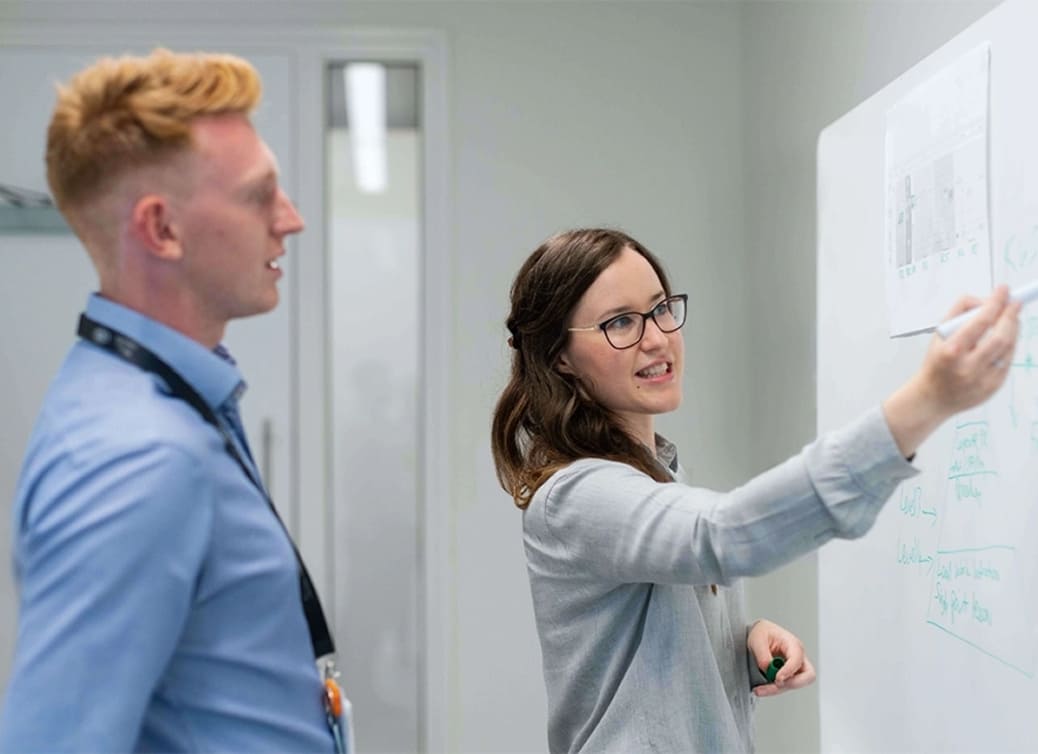
We start by understanding your sourcing goals in detail—pricing targets, timeline requirements, quality standards, and volume projections. This conversation covers your product specifications, must-have features, pain points with current suppliers, and any regulatory requirements. We gather all relevant documents (design files, specs, samples) to set clear objectives before approaching factories.
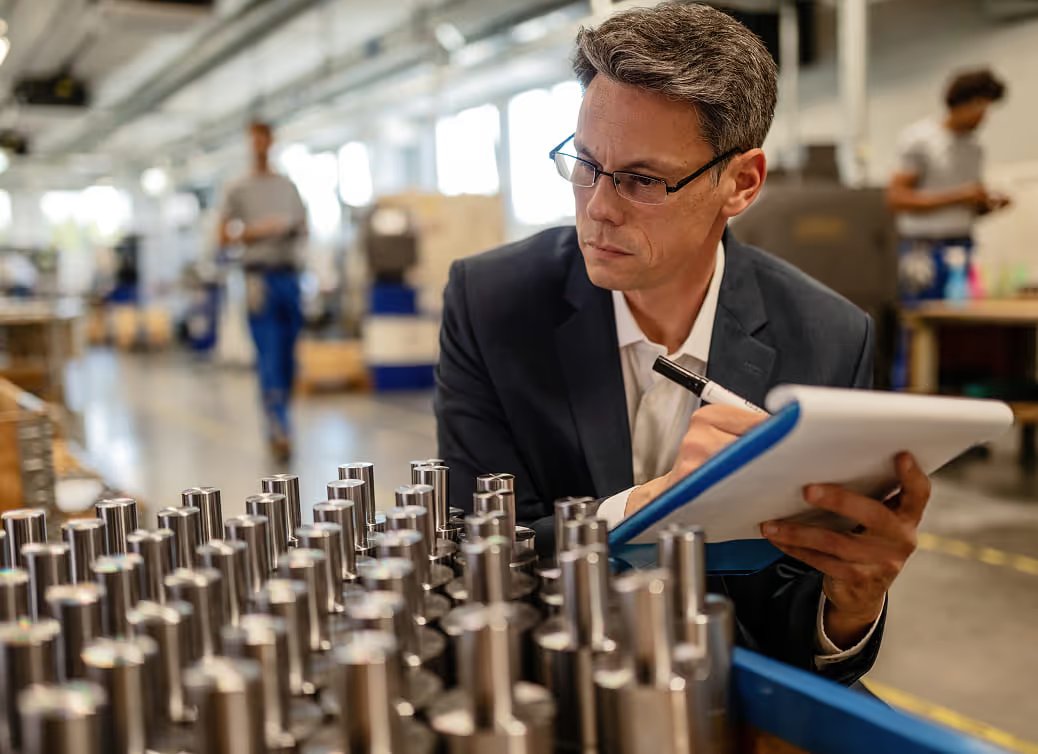
Our Shenzhen team identifies 15-20 relevant suppliers based on the fit between your product and each factory's capabilities. We perform due diligence, check certifications, review financials, and narrow the list to 2-3 finalists. Then we conduct in-person audits of shortlisted suppliers—walking production floors, meeting management, and evaluating quality systems—before presenting our recommendations with transparent assessments.
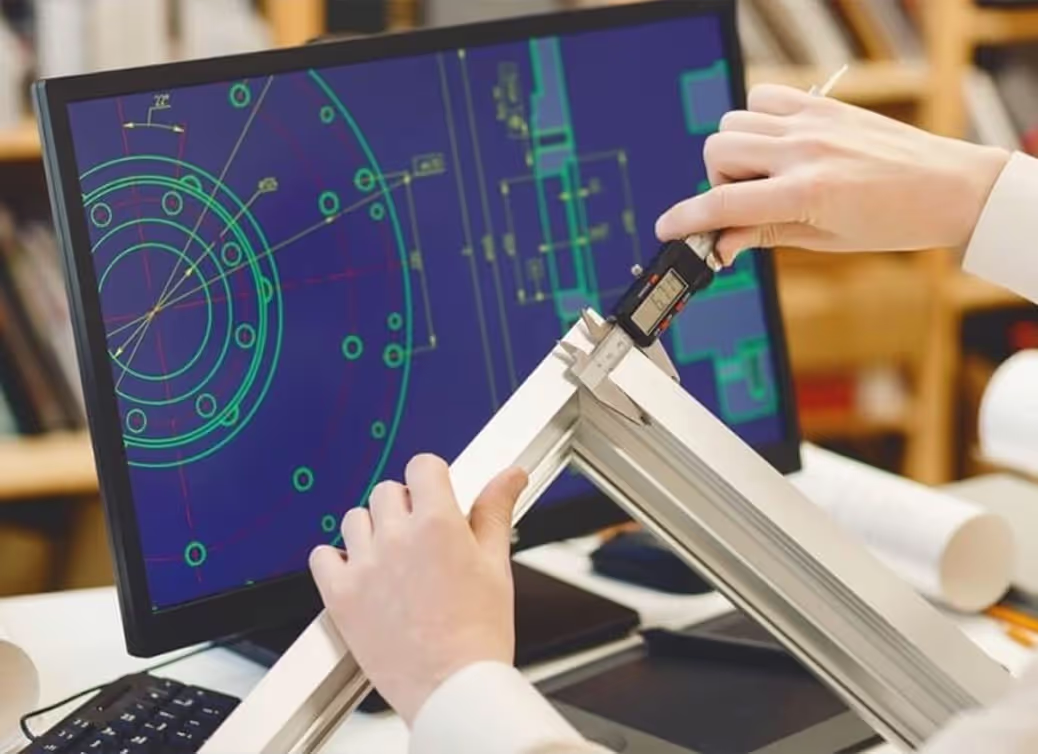
We coordinate design file preparation and submission to your chosen supplier (CAD, Adobe Illustrator, STP, or physical prototypes). For new products, we often work hand-in-hand with you to create the necessary design files. Once the factory produces samples, our team inspects them in-person before shipping to you for review. We manage iteration rounds based on your feedback until you approve the final prototype for production.

After sample approval, we finalize all order details and negotiate the best terms on your behalf—price, quantity, production timeline, and payment terms. Once you pay the deposit, we ensure the order is correctly placed and monitor production progress throughout the manufacturing cycle. Our team conducts on-site QC inspections and batch testing, providing video documentation of the finished products before approving shipment.
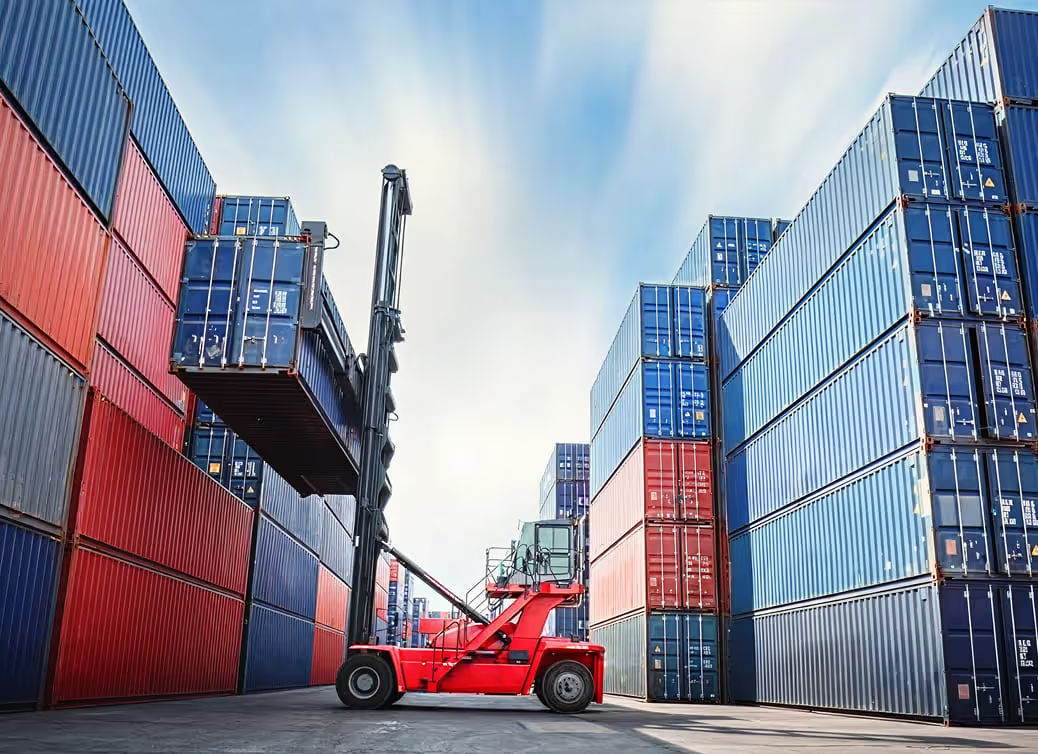
Before your shipment lands in the US (or your destination country), we prepare all required import documentation: bill of lading, packing list, commercial invoice, and ISF filing. We handle HTS code classification to ensure correct duty rates and work with your customs broker to facilitate smooth clearance. This proactive approach prevents holds, surprise fees, or compliance issues.
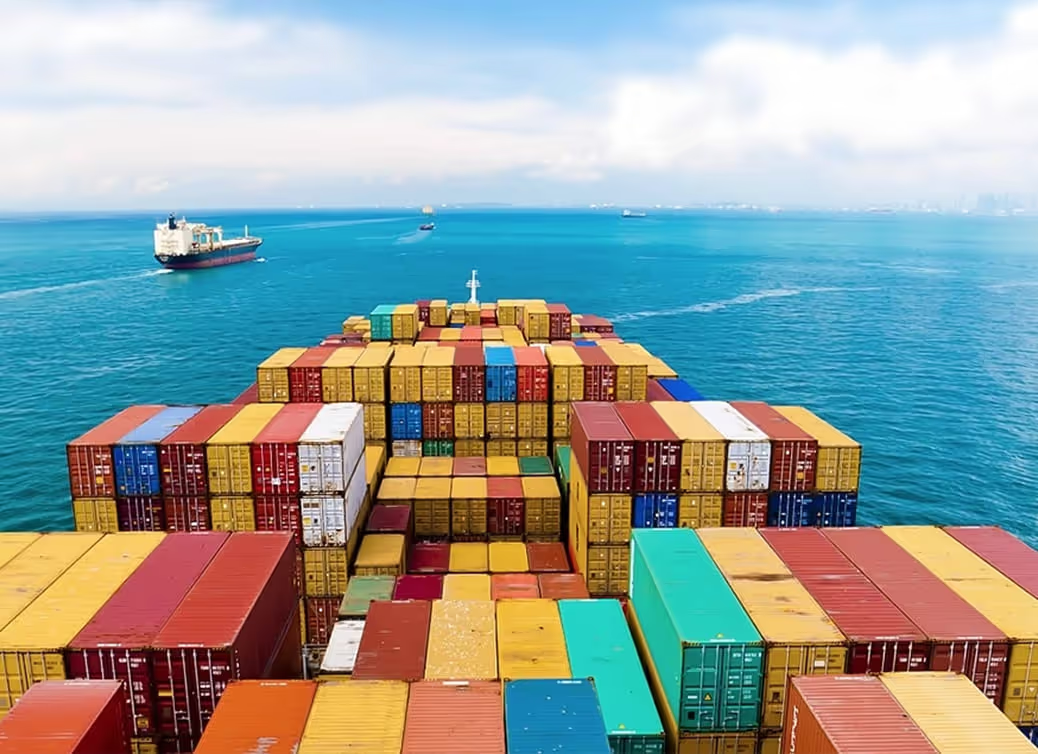
Once customs clearance is complete, we manage drayage coordination to your warehouse or 3PL facility. We oversee ground transportation, track shipments in real-time, and coordinate final receiving. If any issues arise during delivery or receiving, we resolve them immediately with carriers and warehouses to ensure your inventory is shelf-ready and ready to sell.
What's NOT Included in Our OMF
Our flat Overhead Management Fee covers comprehensive sourcing services, but these costs are separate and transparent:

COGS Reductions
Required lab testing (CPSC for children's products, FDA registration for cosmetics/supplements, FCC for electronics) is paid directly to accredited testing facilities. We coordinate the entire process and connect you with our preferred labs, but testing fees are separate.
Mold Costs for Custom Tooling
For products requiring custom molds or dies, there's a one-time tooling investment ($2,000-$15,000 depending on complexity). This cost is amortized over your production runs and dramatically reduces per-unit costs for high-volume orders.
Freight and Shipping Costs
We coordinate all logistics and handle carrier booking, but you pay freight costs directly to carriers or we invoice at cost with zero markup. This ensures you always get the best available rates.
Import Duties and Tariffs
Government-imposed customs duties and Section 301 tariffs are separate charges paid to US Customs. We factor these into your landed cost projections upfront and handle HTS classification to minimize duty exposure, but the duties themselves are paid to customs.
How We Charge
Due Diligence Fee
Deep supplier research, verification & sampling
A one-time Due Diligence fee that covers everything required to identify the right factory andvalidate product quality.
- Comprehensive supplier research & vetting
- Direct communication, capability checks, pricing validation
- Sample coordination, consolidation & quality review
Order Management Fee (OMF)
Percentage of factory cost — full production management
Our OMF is a simple percentage of your factory cost. No hourly billing. No surprises. Wemanage the entire production cycle end-to-end.
- Negotiation on pricing, MOQ, lead times & terms
- Production oversight, QC, compliance & audits
- Logistics coordination, timeline control & issue resolution
Transparent Pass-Through Costs
Factory, testing, and freight costs — always at actual cost
We don’t mark up factory pricing, testing fees, or freight. Every cost from our partners is passed directly to you with full visibility.
- Direct factory invoices, no markups
- Real quotes from labs & freight partners
- Clean, transparent landed-cost structure
Results Kanary Focuses On
COGS Reduction
Driving lower unit costs through factory negotiation and strategic component purchasing.
We leverage bulk component buys and long-term factory partnerships to reduce your per-unitpricing.
Lead-Time Optimization
Shorter, more predictable production timelines.
We work with factories to eliminate bottlenecks, redesign processes when needed, and secure faster manufacturing cycles.
Payment Terms Improvement
Better terms as your brand grows.
As clients build a track record, we negotiate extended payment terms to improve cash flow andsupport larger, more scalable order volumes.
Packaging Optimization
Reducing weight and dimensions to lower fulfillment costs.
We help refine packaging structure and materials to cut volumetric weight — decreasing shipping and warehouse fees without compromising product quality.
Compliance & Customs Confidence
Accurate HTS codes, documentation, and regulatory alignment.
We ensure products are compliant and paperwork is correct to avoid surprise duties, delays, or customs issues.
Kanary vs Typical Resellers

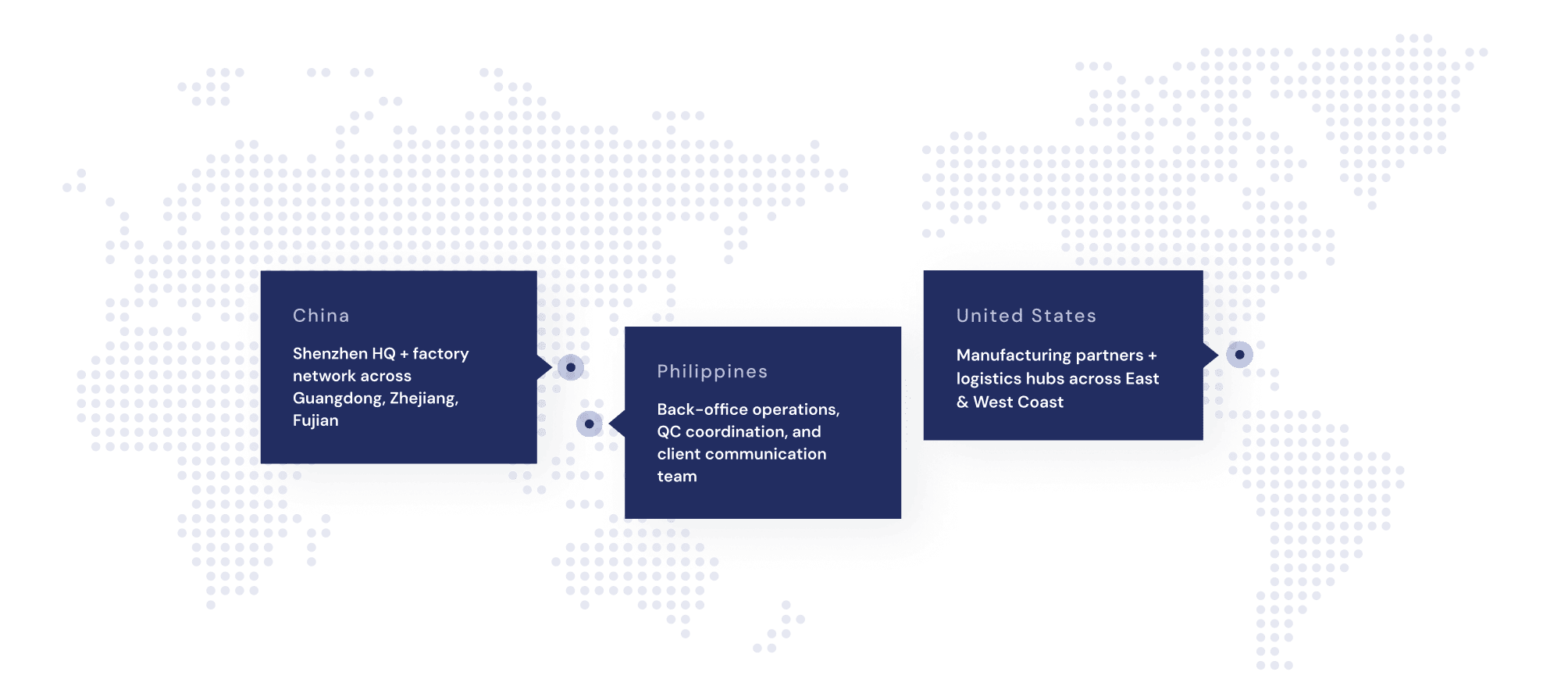
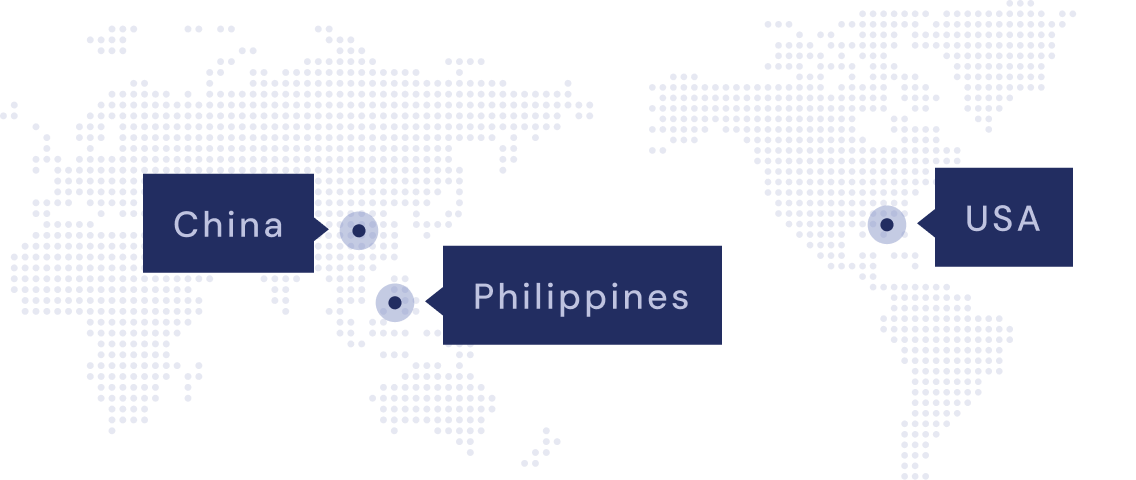
Where We Operate
Get Connected
As a loose guide, the typical “sweet spot” Kanary client who will benefit the most from our process and scaleable expertise will have annual gross revenue starting at approximately 5 million USD. If your business meets — or is approaching — this threshold, we can help you!
DTC Operators FAQ
How much does it cost to make a prototype in China?
The cost to make a prototype in China will vary depending on your chosen supplier and the kind of product you're looking to prototype. While there's no set price, there are a few fees that are unique to prototyping:
- 3D sampling: It's not uncommon to receive a 3D printed sample of a novel product. Creating and shipping this sample will be an extra cost.
- Molds: Molds are what a supplier can use to mass produce your product after a successful prototype has been made. While molds have a significant upfront cost, they may pay for themselves if you plan on making a high-volume order.
How do you make a 3D prototype before mass production?
You'll need to send the design files to your supplier so they can create a 3D prototype. Common files include CAD and Adobe Illustrator (AI) files. Once a supplier has these files, and you've given a thorough explanation of what you're looking for, a 3D prototype can be made.
Who can build me a prototype in China?
You'll need to find a China supplier that has the engineering capacity to either customize products or create products from scratch. While there are many factories in China capable of making prototypes, not all factories can. Even among the suppliers that can, they may not have the experience in your specific industry niche to partner with you.
Your business will need to take time to find potential suppliers, and then narrow those suppliers down based on your needs and the perceived quality of the factories. If you think you'd benefit from removing the guesswork, time, and resources into finding a supplier, then you may want to work with a sourcing specialist, like Kanary.
How do I get a prototype built in China?
There are a few basic steps you can expect to follow when making a prototype in China. Keep in mind your specific steps may vary depending on your products, your supplier, and your needs:
- Search for suppliers: You need to find suppliers that have the engineering experience and capability to make prototypes.
- Send design files: You should have detailed, precise design files for your prototype (usually CAD and Adobe Illustrator (AI) files). Those files will be sent to the supplier, and they'll use them to make a 3D sample.
- Evaluate 3D sample: When you receive the 3D sample, make sure your design files were followed and that your overall design works. You may need to provide feedback to the supplier about a mistake they made, or you may need to tweak your design for your product to be functional.
- Pay for a mold: If you're going to mass produce your prototype, your supplier will need to make a mold on your behalf. While there is a large, upfront cost for a mold, it will greatly reduce the per unit cost during mass production, and is generally worth the investment for large volume orders
- Supervise production: When mass production is ready, you'll want to monitor production. This will help you ensure that quality control processes are being followed, and it will help you identify production issues quickly.
What's the difference between a prototype and a custom product?
A prototype is a brand-new product that is not currently being sold. A custom product is a variation of a product that exists with unique modifications. For example, the very first fidget spinner was a prototype, while subsequent fidget spinners with unique designs and features were customized products.