
Topical pain creams & gels

Variants & Specs Matrix
Choose your base, actives, texture, and packaging — white-label ready or fully customizable.
MOQs & Lead Times
White-label starts at 3K pcs — custom actives/packaging add 1–2K. Full timeline from sample to 3PL door.
MOQs
Lead Times
Ingredient & Packaging Options
White-Label vs. Custom vs. Full R&D
Label swaps in 2 weeks — new actives trigger stability; full R&D for CBD or novel claims.
Compliance & Claims Guardrails
Cosmetic-only labeling, INCI, GMP/ISO 22716 — no medical claims. Full COA, stability, and micro package included.
Cosmetic-Only Labeling & INCI
- Full INCI list, net quantity, and manufacturer details on every unit.
- No drug facts panel required.
GMP/ISO 22716 & Testing Scope
- All production under GMP/ISO 22716 standards.
- Stability + micro only when actives >5% or new carrier.
Claims Boundaries & Paperwork
- “Soothes”, “cools”, “supports recovery” — no medical/OTC promises.
- You receive: COA, batch record, stability report, micro clearance, INCI list.
Quality Plan
We test every batch like it’s going to your best customer — defect rate under 1%, guaranteed.
- Viscosity
8,000–20,000 cPs
Non-greasy, smooth flow every time. - Fill-Weight
±2% tolerance
No short-fills — exact weight in every unit. - Seal Integrity
Vacuum test on every unit
No leaks, no returns — guaranteed seal. - Transit Simulation
6ft drop + 40°C/75% RH
Real-world stress test — survives shipping. - AQL Sampling
AQL 1.0/2.5 pre-shipment
200+ units inspected — defects caught before dock.
Cost Drivers & Quote Inputs
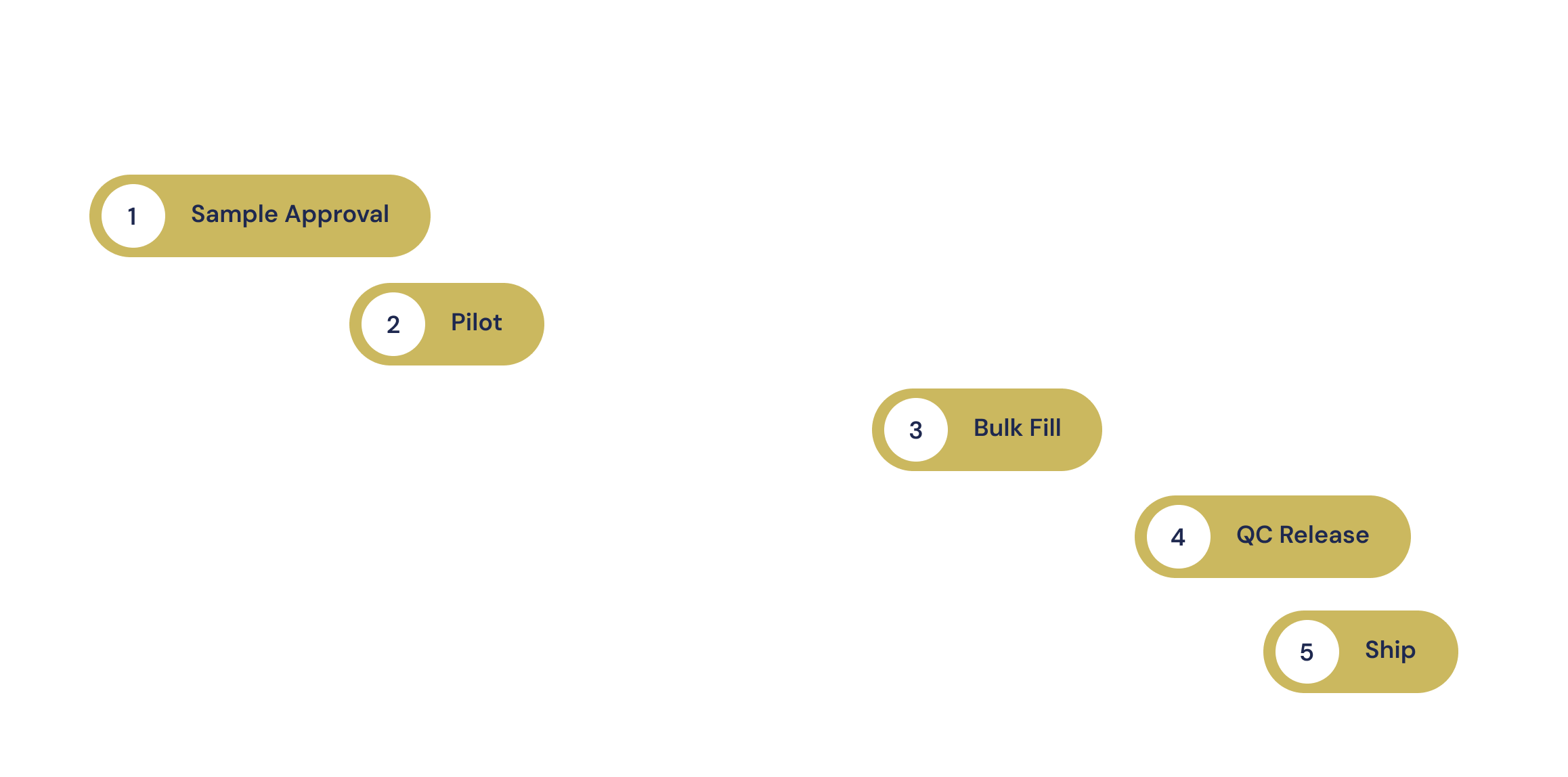
Production Timeline
From sample sign-off to 3PL door in 9 weeks — buffer 2 extra for customs peaks.

Get Connected
As a loose guide, the typical “sweet spot” Kanary client who will benefit the most from our process and scaleable expertise will have annual gross revenue starting at approximately 5 million USD. If your business meets—or is approaching—this threshold, we can help you!
Product-Level FAQ
How much does it cost to make a prototype in China?
The cost to make a prototype in China will vary depending on your chosen supplier and the kind of product you're looking to prototype. While there's no set price, there are a few fees that are unique to prototyping:
- 3D sampling: It's not uncommon to receive a 3D printed sample of a novel product. Creating and shipping this sample will be an extra cost.
- Molds: Molds are what a supplier can use to mass produce your product after a successful prototype has been made. While molds have a significant upfront cost, they may pay for themselves if you plan on making a high-volume order.
How do you make a 3D prototype before mass production?
You'll need to send the design files to your supplier so they can create a 3D prototype. Common files include CAD and Adobe Illustrator (AI) files. Once a supplier has these files, and you've given a thorough explanation of what you're looking for, a 3D prototype can be made.
Who can build me a prototype in China?
You'll need to find a China supplier that has the engineering capacity to either customize products or create products from scratch. While there are many factories in China capable of making prototypes, not all factories can. Even among the suppliers that can, they may not have the experience in your specific industry niche to partner with you.
Your business will need to take time to find potential suppliers, and then narrow those suppliers down based on your needs and the perceived quality of the factories. If you think you'd benefit from removing the guesswork, time, and resources into finding a supplier, then you may want to work with a sourcing specialist, like Kanary.
How do I get a prototype built in China?
There are a few basic steps you can expect to follow when making a prototype in China. Keep in mind your specific steps may vary depending on your products, your supplier, and your needs:
- Search for suppliers: You need to find suppliers that have the engineering experience and capability to make prototypes.
- Send design files: You should have detailed, precise design files for your prototype (usually CAD and Adobe Illustrator (AI) files). Those files will be sent to the supplier, and they'll use them to make a 3D sample.
- Evaluate 3D sample: When you receive the 3D sample, make sure your design files were followed and that your overall design works. You may need to provide feedback to the supplier about a mistake they made, or you may need to tweak your design for your product to be functional.
- Pay for a mold: If you're going to mass produce your prototype, your supplier will need to make a mold on your behalf. While there is a large, upfront cost for a mold, it will greatly reduce the per unit cost during mass production, and is generally worth the investment for large volume orders
- Supervise production: When mass production is ready, you'll want to monitor production. This will help you ensure that quality control processes are being followed, and it will help you identify production issues quickly.
What's the difference between a prototype and a custom product?
A prototype is a brand-new product that is not currently being sold. A custom product is a variation of a product that exists with unique modifications. For example, the very first fidget spinner was a prototype, while subsequent fidget spinners with unique designs and features were customized products.