
Home & Lifestyle
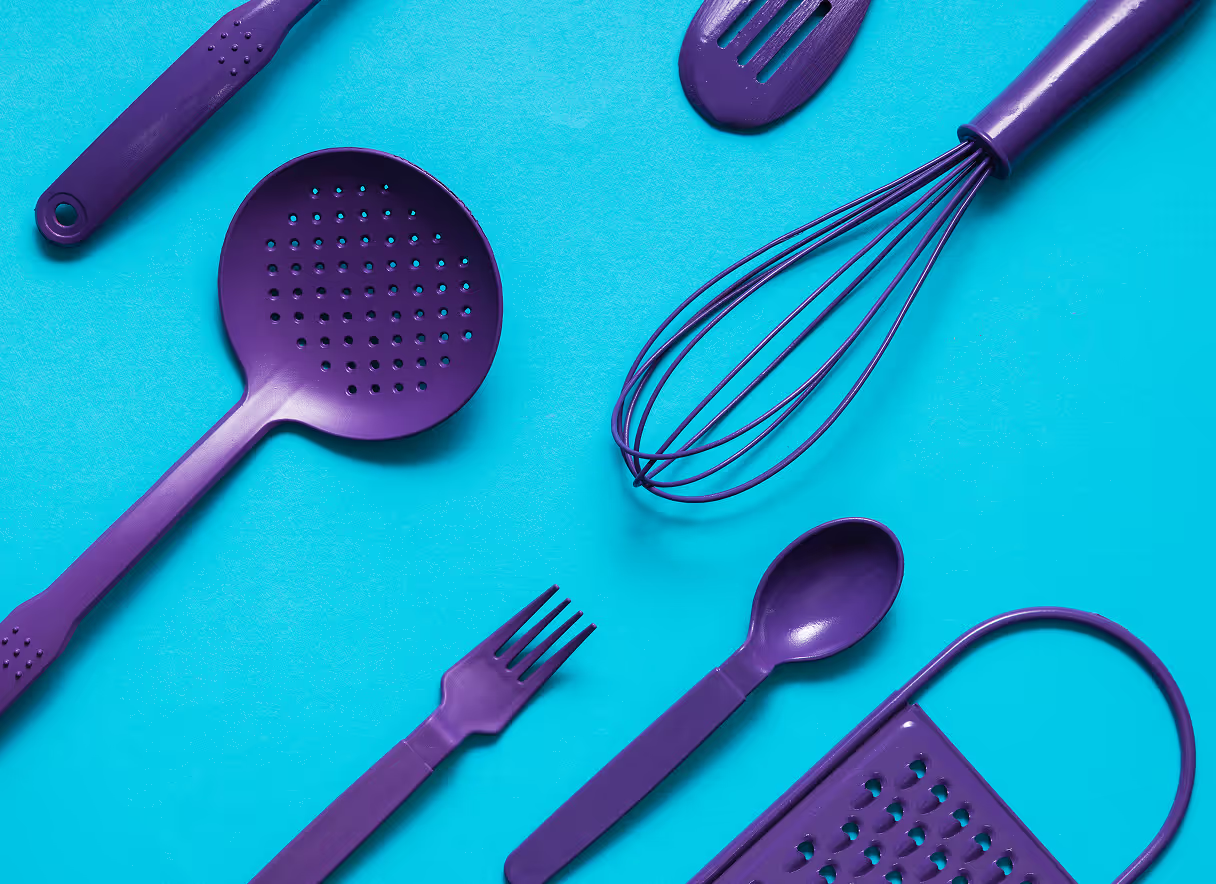
Product Categories

White Label vs Customization


Want to launch fast or stand out with small changes?
Want to create something entirely new?
MOQs by Product Type
Lead Times by Product Type
Typical Import Timeline: Factory to Warehouse
General manufacturing timelines for home and lifestyle products in China:

Production after sampling
When components are on hand (can extend with component sourcing)
Production
Production
(Component-dependent)
Timelines vary based on tooling requirements, component availability, testing needs, and seasonality. Total timeline from factory search to delivered inventory commonly runs 10-16 weeks.
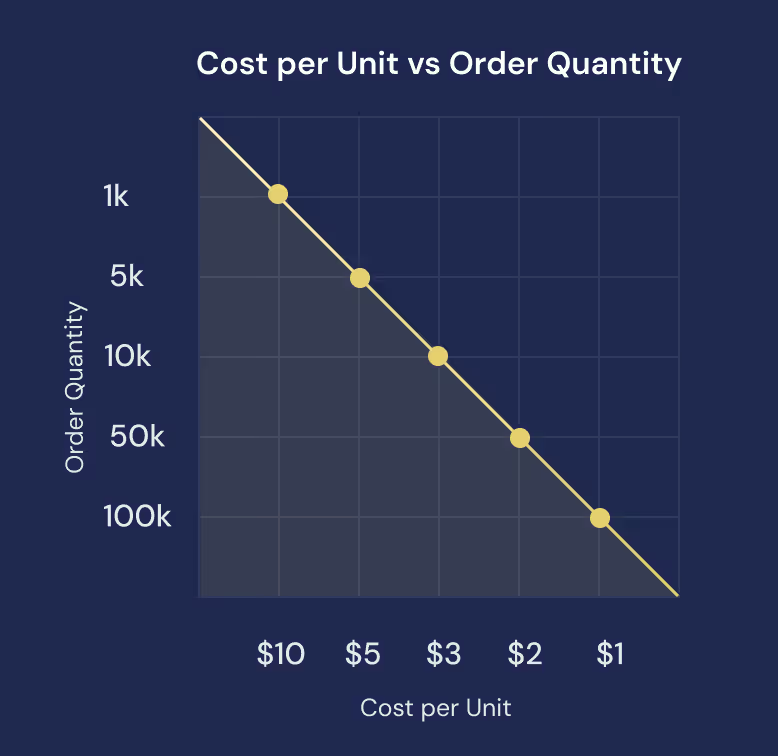
Cost Levers & Unit Economics
Best Manufacturing Countries & When to Choose Each

China dominates home and lifestyle product manufacturing with specialized factories for kitchen goods, consumer electronics, footwear, and organizational products. Deep material supply chains, custom mold capabilities, and capacity for both boutique products and mass production. Ideal for custom development, cost-effective scaling, and access to specialized manufacturers.
- Product safety material certifications widely available
- Custom product development with engineering teams
- Among the most cost-effective per-unit pricing at scale
- Complete material and component supply chains
- Flexible MOQs (500-3,000 units depending on complexity)
- Mold creation capabilities for unique designs
- 4-6 week general timelines, 2-3 weeks for electronics with components

U.S. manufacturing offers simplified safety verification, faster communication cycles, shorter shipping times, and easier material traceability. Best for brands prioritizing "Made in USA" positioning, rapid iteration, or products requiring frequent design changes based on customer feedback or regulatory compliance.
- No import duties or customs delays
- Faster sampling cycles (3-5 days vs 2-3 weeks)
- Direct access to U.S. material suppliers
- Easier safety testing and compliance verification
- "Made in USA" brand positioning for marketing
- Smaller test runs possible (500-2,000 units)
- 3-6 week production timelines
From Brief to First Ship
White Label Fast-Track
Select Product & Review Samples
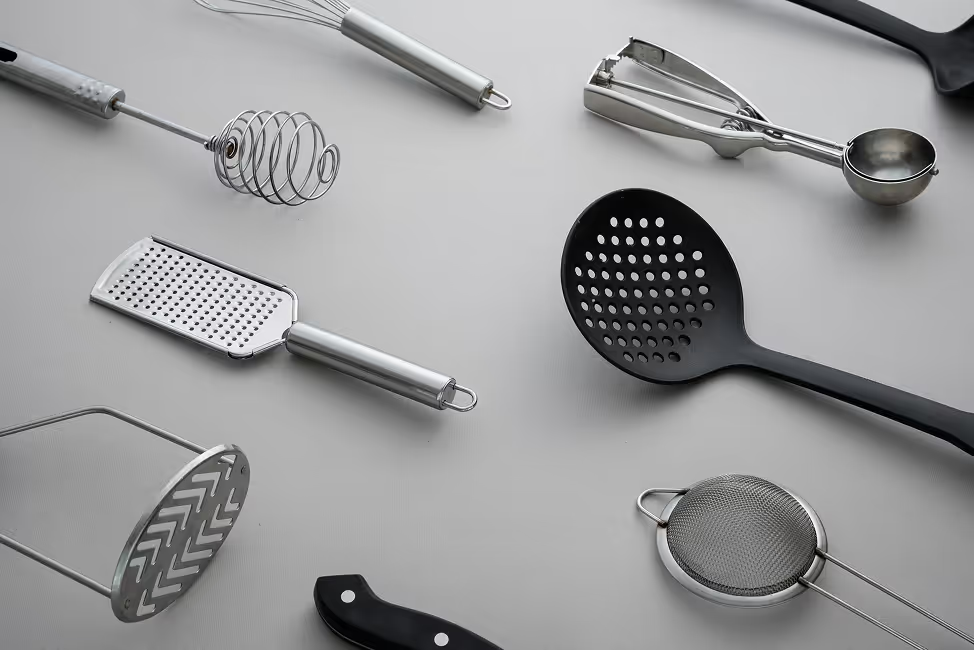
Choose from our catalog of pre-developed home and lifestyle products—kitchen gadgets, storage solutions, security devices, cleaning equipment, smart home tech, sleep products, or outdoor gear. We send samples from verified factories to your location. Test functionality, durability, and quality to verify the product meets your brand standards before committing to customization.
- Functionality and durability testing
- Material quality and safety evaluation
- Packaging format assessment
Brand Customization & Packaging Design
Once you approve the product, we apply your brand identity through custom labels, packaging design, and visual elements. Our team coordinates with the factory to ensure proper safety warnings, care instructions, and compliance requirements. You review packaging mockups and label artwork before production.
- Safety warnings and product instructions
- Custom label design and brand application
- Packaging mockup approval

Production, Quality Control & Shipment
Factory begins production with your custom branding applied. Our team conducts on-site quality inspections to verify product consistency, material safety, and functional performance. After final approval, we arrange freight, prepare customs documentation, and coordinate delivery to your warehouse or fulfillment center.
- Product consistency verification
- Functional testing and QC checks
- Customs documentation and freight coordination

Customization
Product Design & Engineering
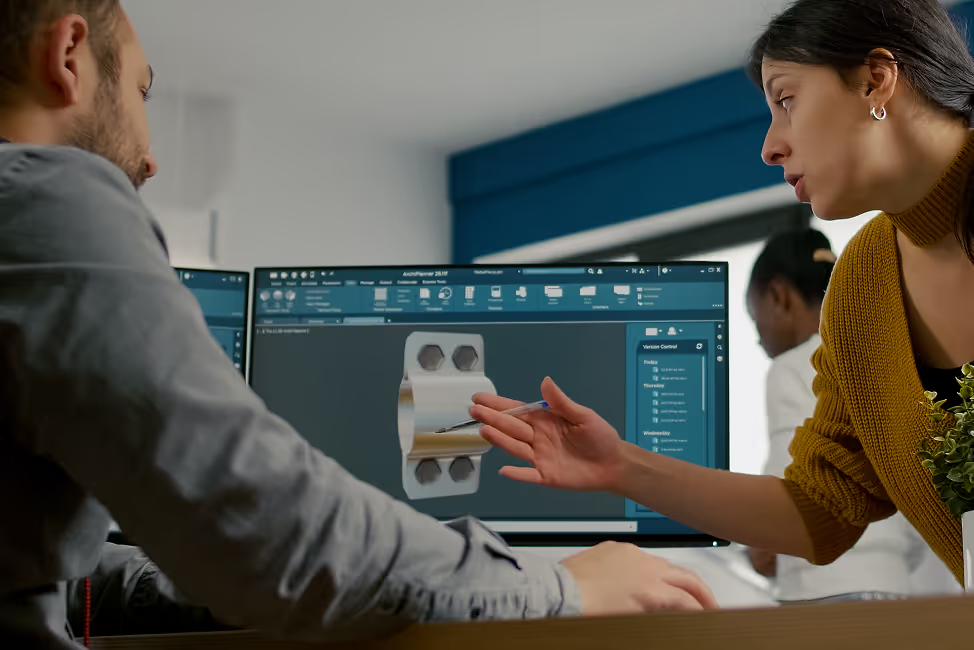
Work directly with factory engineers to develop your custom home or lifestyle product. Define dimensions, select materials, specify features and functionality, choose components (for electronics), and establish safety requirements. Factory creates initial design mockups, 3D models, or CAD files for your evaluation.
- Product specifications and dimensions
- Material selection and safety requirements
- Initial design mockups or 3D models created
Prototyping & Testing
Review initial prototypes (3D printed or CNC machined) and provide feedback on design, function, or materials. Factory adjusts based on input. Conduct durability testing, functional verification, and material safety testing. Additional prototypes produced for final approval before tooling investment.
- Design refinement based on feedback
- Durability and functional testing conducted
- Material certifications verified

Tooling, Certification & Packaging
Once design is approved, create production molds or tooling for custom shapes. For electronics, finalize component sourcing and PCB design. Compile safety documentation and certifications. Finalize packaging specifications and custom artwork with compliance requirements.
- Production molds/tooling created
- Component sourcing finalized (for electronics)
- Safety certifications and documentation assembled

Production, QC & Delivery
Full-scale production begins with your custom design and packaging. Our Shenzhen team monitors product consistency, conducts functional spot-checks, and ensures safety standards throughout manufacturing. Final pre-shipment inspection completed before arranging freight and customs clearance.
- Production with consistency monitoring
- Functional testing on production samples
- Pre-shipment inspection and freight coordination

Ready to Launch Your Home & Lifestyle Brand?


Safety Standards & Certifications
Kanary works with factories that can provide testing and certifications relevant for fitness products. Common safety standards and testing include:
- Consumer product safety testing
- Food-safe material certifications (for kitchen products)
- Electrical safety certifications (UL, CE, FCC for electronics)
- Material safety testing (BPA-free, non-toxic)
- Durability and performance testing
Testing Labs: Factories work with internationally recognized third-party testing labs for certification verification. Common industry labs include SGS, Intertek, and Bureau Veritas (BV), among others.
Note: Testing requirements and costs vary by product type and target market. Our team helps identify which certifications are necessary for your specific products and ensures factories can provide proper documentation.
Checklists
Product Safety Requirements
- Material safety certifications – non-toxic materials suitable for consumer use
- Durability testing – functional performance across expected product lifetime
- Small parts hazard assessment (if applicable) – choking hazard prevention
- Material safety documentation – COAs for all materials used
- Electrical safety certifications (for electronics) – UL, CE, FCC compliance
- Care and safety instructions – proper labeling and warnings
Quality Control Standards
- Material consistency testing – verify batch-to-batch consistency
- Assembly quality checks – ensure secure construction
- Functional testing – product performs as intended
- Packaging integrity – proper protection during shipping
- Color consistency (if applicable) – shade matching across batches
- Weight and dimension verification – meets specifications
What Can Go Wrong
Factory
What can go wrong:
- Using cheaper materials than specified to cut costs
- Inadequate durability testing leading to product failures
- Poor quality control allowing defective items to ship
- Component substitutions (for electronics) without notification
How we prevent it:
- Material verification before production begins
- Durability and functional testing on production samples
- Regular factory audits and QC inspections
- Component verification for electronics
- Batch retention samples for traceability
Trade Company
What can go wrong:
- Cannot verify actual factory safety standards
- No visibility into material sourcing or component quality
- Markup pricing without quality oversight
- Product changes between batches without knowledge
- May connect you with wrong factory type (kitchen factory making electronics, security device factory making cleaning equipment, etc.)
How we prevent it:
- Work directly with factories, no middlemen
- Verify all material COAs and component specs
- Maintain full chain-of-custody documentation
- Regular factory visits and quality monitoring
- Match product requirements to specialized factory capabilities
Fulfillment Company
What can go wrong:
- Improper storage damaging products
- Mixing up SKUs or product batches
- No quality checks before shipping to customers
- Cannot address product quality issues at source
How we prevent it:
- Partner with fulfillment centers experienced with consumer goods
- Barcode-based lot tracking system
- Quality spot-checks at fulfillment level
- Direct factory relationship for issue resolution

.avif)

Get Your Free Home Product Sourcing Checklist
Get Connected
As a loose guide, the typical “sweet spot” Kanary client who will benefit the most from our process and scaleable expertise will have annual gross revenue starting at approximately 5 million USD. If your business meets—or is approaching—this threshold, we can help you!